
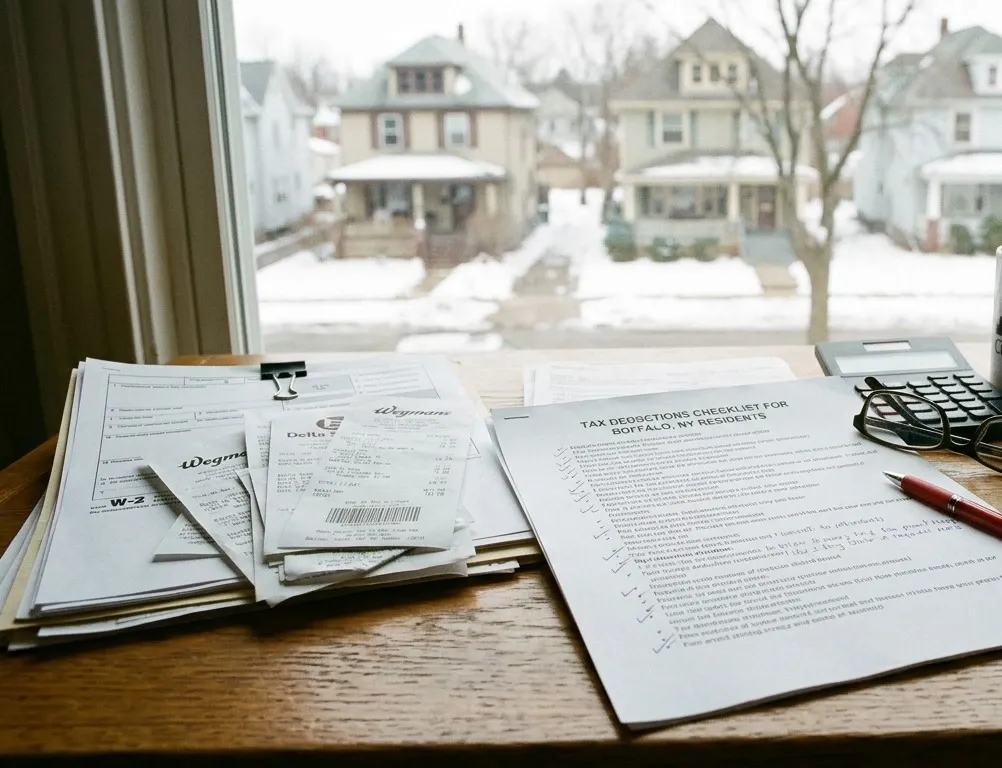
Every tax season, many people in Buffalo end up paying more taxes than necessary simply because they miss deductions they legally qualify for. Some forget to track expenses during the year, while others assume tax deductions only apply to business owners or high-income households. The reality is that tax deductions can apply to homeowners, families, freelancers, retirees, remote workers, contractors, and small business owners throughout Buffalo and Western New York. At KD Accounting & Tax, we regularly work with local residents who are surprised to learn how many deductible expenses they overlooked. In many cases, simple organization and year-round planning can make a major difference when filing taxes.
This guide breaks down the most common tax deductions Buffalo residents should know about, along with practical tips to help you stay organized, reduce tax stress, and avoid common filing mistakes. Tax rules, thresholds, and dollar limits change from year to year. Some, like the IRS mileage rate, changed more than once during 2026 alone. The figures in this guide reflect current federal and New York State guidance as of this writing; always confirm the numbers that apply to your specific filing year before relying on them.
Why Tax Deductions Matter More Than Most People Think
When people hear the word “deduction,” they often assume it only saves a small amount of money. But deductions can have a significant impact on your taxable income. Deductions work by lowering the income the IRS actually taxes, not by cutting your tax bill dollar-for-dollar.
The real effect on any given return depends on filing status, total income, which deductions and credits apply, and whether you itemize or take the standard deduction. That’s exactly why a checklist approach, knowing what to track, matters more than trying to estimate savings in advance.
For Buffalo residents dealing with:
- Property taxes
- Student loan payments
- Medical bills
- Small business expenses
- Childcare costs
- Retirement planning
Proper tax preparation becomes even more important. Many taxpayers wait until March or April to organize receipts and paperwork. Unfortunately, by then, valuable deductions are often forgotten.
Understanding the Difference Between Tax Deductions and Tax Credits
A lot of people confuse deductions and credits, but they work differently.
i. Tax Deductions
Deductions reduce your taxable income.
ii. Tax Credits
Credits directly reduce the taxes you owe.
Both are valuable, and many Buffalo taxpayers qualify for a combination of deductions and credits depending on their situation.
Standard Deduction vs Itemized Deductions
One of the first things taxpayers need to determine is whether to:
- Take the standard deduction
- Itemize deductions
For many people, the standard deduction is the simpler option. However, itemizing may provide greater savings if your deductible expenses are high enough.
This is especially common for:
- Homeowners
- Self-employed individuals
- People with large medical expenses
- Families with significant charitable contributions
A tax professional can compare both options to determine which one benefits you more. For the 2026 tax year, the federal standard deduction is $16,100 for single filers and married individuals filing separately, $24,150 for head of household, and $32,200 for married couples filing jointly. These amounts are set by the IRS and adjust annually, so always confirm the current year’s figures before filing.
Homeowner Tax Deductions in Buffalo NY
Homeownership comes with several tax advantages that Buffalo residents sometimes overlook. With property taxes and housing costs being a major part of household budgets in Western New York, these deductions can become valuable during filing season.
1. Mortgage Interest Deduction
If you own a home in Buffalo, you may be able to deduct mortgage interest paid throughout the year.
This often applies to:
- Primary residences
- Certain refinanced loans
- Some home equity borrowing situations
Most homeowners receive Form 1098 from their lender, which shows mortgage interest paid during the year. One thing many homeowners miss is keeping organized records after refinancing. Refinancing paperwork can become important during tax preparation.
2. Property Tax Deduction
Property taxes in New York can add up quickly, especially for homeowners in Erie County and surrounding areas. Eligible property taxes may qualify under federal deduction rules, but only if you itemize, and only subject to the SALT (state and local tax) deduction cap. For the 2026 tax year, the federal SALT cap is $40,400 for most filers ($20,200 for married filing separately), up from the long-standing $10,000 limit, though it phases down for higher earners above roughly $505,000 in modified adjusted gross income.
New York State applies its own itemized deduction rules on the state return, separate from the federal SALT limitation, which is one more reason Buffalo homeowners benefit from having both returns reviewed together rather than in isolation
Potentially deductible taxes may include:
- County taxes
- School taxes
- Local municipal taxes
Many Buffalo homeowners are surprised at how important accurate property tax documentation becomes during filing.
Read this too – IRS rules for deductible state and local taxes
3. Home Office Deduction for Self-Employed Residents
Remote work and self-employment have become increasingly common throughout Buffalo. If you are self-employed and use part of your home regularly and exclusively for business purposes, you may qualify for a home office deduction.
Important: This deduction is generally available to self-employed taxpayers and qualifying business owners. W-2 employees working remotely generally cannot claim a federal home office deduction for unreimbursed employee expenses, even if they work from home full-time. If you’re unsure which category you fall into, that’s worth confirming before claiming anything.
This may apply to:
- Freelancers
- Consultants
- Online business owners
- Contractors
- Self-employed professionals
Potential deductible expenses may include:
- Internet
- Utilities
- Rent
- Mortgage interest
- Home insurance
- Office maintenance
One common mistake people make is trying to deduct shared living spaces that do not meet IRS requirements. Dedicated workspace documentation matters.
Medical Expense Deductions
Healthcare expenses can place a heavy financial burden on families, retirees, and individuals managing long-term medical conditions. Certain unreimbursed medical expenses may qualify as deductions if they exceed IRS thresholds.
Federally, only unreimbursed medical expenses exceeding 7.5% of adjusted gross income are deductible on Schedule A. New York State calculates its own itemized medical deduction separately, so the federal and state amounts you can claim won’t always match
1. Common Medical Expenses That May Qualify
Possible deductible medical expenses include:
- Doctor visits
- Specialist appointments
- Prescription medications
- Dental treatments
- Eye exams and glasses
- Physical therapy
- Mental health counseling
- Medical equipment
Buffalo residents dealing with ongoing healthcare costs often underestimate how much these expenses add up throughout the year.
2. Medical Mileage Deduction
One deduction people commonly forget is medical-related mileage.
Travel expenses for medical care may qualify when the trip is primarily for, and essential to, obtaining medical care; not every errand that happens to involve a pharmacy or clinic automatically counts.
The IRS medical mileage rate also changed mid-year in 2026: 20.5 cents per mile for travel from January through June, and 23.5 cents per mile from July through December.
Because rates like this can shift during the year, keeping a dated mileage log, not just a running total, is what actually supports the deduction.
Charitable Donation Deductions
Buffalo has a strong community culture, and many local residents regularly support churches, shelters, schools, nonprofits, and local charities.
Donations may qualify as tax deductions when properly documented.
1. What Donations May Be Deductible?
Eligible donations may include cash gifts, clothing, furniture, household items, electronics, and vehicle donations, but only when given to a qualified organization and properly valued.
The IRS has specific substantiation rules, including additional written-acknowledgment requirements for any single contribution of $250 or more. Donating an item doesn’t automatically create a deduction; the paperwork is what makes it hold up.
Always keep:
- Donation receipts
- Bank statements
- Charity acknowledgment letters
Without proper records, deductions may not hold up during an audit.
Student Loan Interest Deduction
Student loan debt continues to affect many individuals and families throughout Western New York.
Taxpayers may qualify to deduct interest paid on eligible student loans.
This often benefits:
- Young professionals
- College graduates
- Working adults returning to school
- Parents helping with payments
Even taxpayers who use the standard deduction may still qualify for this adjustment.
Education-Related Tax Benefits
Education expenses may open up additional tax opportunities beyond student loan interest, primarily through federal education tax credits tied to qualifying tuition and related expenses.
Professional certifications, career training, and general continuing education, on the other hand, don’t automatically generate a deduction or credit simply because they’re work-related; the IRS applies specific rules here, and job-related education isn’t treated as an automatic write-off. For working professionals in Buffalo pursuing career advancement, it’s worth having a professional confirm which specific expenses qualify before assuming they do
Retirement Contribution Deductions
Retirement planning is not only about the future. It can also reduce taxable income today. Contributions to certain retirement accounts may qualify as deductions.
Common Retirement Accounts That May Qualify
Examples include:
- Traditional IRA
- SEP IRA
- SIMPLE IRA
- Self-employed retirement plans
This is especially important for freelancers and business owners who manage their own retirement savings.
Many self-employed taxpayers in Buffalo overlook retirement contribution opportunities that could reduce their taxable income, though the actual deduction is subject to annual contribution limits and eligibility rules that vary by account type.
Health Savings Account (HSA) Deduction
Health Savings Accounts remain one of the most tax-efficient tools available.
Benefits may include:
- Tax-deductible contributions
- Tax-free medical withdrawals
- Long-term savings growth
Families dealing with rising healthcare costs often benefit from HSAs when paired with eligible health insurance plans.
Self-Employed Tax Deductions Buffalo Residents Often Miss
Buffalo’s local economy includes many:
- Freelancers
- Consultants
- Contractors
- Rideshare drivers
- Delivery drivers
- Online sellers
- Small business owners
Self-employed individuals generally have more deduction opportunities than employees, but only for expenses that qualify as ordinary and necessary business expenses, and they also carry more recordkeeping responsibility to support those claims.
Vehicle and Mileage Deductions
Business-related driving may qualify for deductions, but ordinary commuting, driving from home to a regular place of business, generally doesn’t count. Even for the self-employed. Qualifying trips typically include client meetings, supply pickups, service calls, and other business errands away from a fixed base of operations.
The rate itself also changed mid-2026: 72.5 cents per mile from January through June, rising to 76 cents per mile from July through December. One of the biggest mistakes self-employed individuals make is failing to log mileage consistently and failing to separate business trips from ordinary commuting throughout the year.
Equipment and Office Supply Deductions
Business equipment purchases may also qualify as deductions.
Examples include:
- Computers
- Monitors
- Desks
- Printers
- Cameras
- Business phones
- Office supplies
Accurate bookkeeping helps ensure expenses are categorized properly.
Internet and Phone Expense Deductions
Many self-employed professionals use internet and phone services for business activities. A percentage of these costs may qualify as deductible when used for work purposes.
This is especially common for:
- Remote workers
- Online businesses
- Freelancers
- Consultants
Keeping separate business accounts can make documentation easier during tax preparation.
Marketing and Advertising Deductions
Marketing expenses are commonly deductible business costs.
Potential deductible expenses include:
- Website development
- SEO services
- Google Ads
- Facebook advertising
- Branding
- Business cards
- Photography
- Printing materials
Many small businesses in Buffalo invest heavily in digital marketing to improve local visibility and attract customers online.
Professional Service Deductions
Fees paid to professionals may also qualify as business deductions.
Examples include:
- Accountants
- Tax preparers
- Lawyers
- Consultants
- Payroll providers
- Bookkeepers
Professional financial guidance often helps businesses avoid costly tax mistakes later.
Business Insurance Deductions
Insurance costs are another commonly overlooked deduction.
Potentially deductible business insurance may include:
- Liability insurance
- Commercial auto insurance
- Professional coverage
- Workers’ compensation insurance
Business owners should maintain organized policy and payment records.
Business Meal Deductions
Business meals may qualify for partial deductions when tied to legitimate business purposes. Not every meal with a client, colleague, or contact is automatically deductible; the business purpose has to be real and documented, not assumed.
Examples may include:
- Client meetings
- Networking lunches
- Business travel meals
Documentation matters here as well.
Always keep:
- Receipts
- Dates
- Business purpose
- Attendee information
Tax Deductions for Gig Workers in Buffalo NY
Gig economy jobs continue growing throughout Buffalo and surrounding communities. Workers for rideshare and delivery platforms often overlook several deductible expenses.
Common Gig Worker Deductions
Potential deductions may include:
- Mileage
- Vehicle maintenance
- Insurance
- Phone expenses
- Navigation apps
- Car cleaning costs
Without organized expense and mileage tracking, gig workers may overlook deductions they otherwise qualify for.
Common Tax Filing Mistakes Buffalo Residents Make
At KD Accounting & Tax, we frequently see the same filing mistakes repeated each tax season. Avoiding these issues can help reduce stress and improve accuracy.
1. Poor Recordkeeping
Missing receipts and incomplete records create problems during filing.
Important documents should include:
- W-2 forms
- 1099 forms
- Donation receipts
- Bank statements
- Mileage logs
- Mortgage records
Waiting until the last minute usually increases the chance of missing deductions.
2. Mixing Personal and Business Expenses
This is very common among freelancers and small business owners. Using separate accounts for business transactions makes bookkeeping easier and helps ensure expenses are properly substantiated if the IRS ever asks.
3. Missing Quarterly Tax Payments
Self-employed individuals may need to make estimated quarterly tax payments.
Missing these deadlines can result in:
- Penalties
- Interest charges
- Unexpected tax bills
Quarterly planning helps prevent surprises during tax season.
4. Claiming Unsupported Deductions
Some taxpayers accidentally claim deductions without proper documentation. This can increase audit risk. Accurate records and professional guidance help substantiate the deductions you claim and support compliance, though no amount of documentation guarantees a return won’t be selected for review.
Tax Planning Tips for Buffalo Residents
Good tax planning should happen year-round, not just during filing season.
1. Track Expenses Monthly
Monthly bookkeeping helps:
- Reduce stress
- Improve accuracy
- Prevent forgotten deductions
Even simple spreadsheets can help organize expenses effectively.
2. Save Digital Copies of Important Documents
Cloud storage and accounting software can simplify organization. Digital copies help protect against lost paperwork.
3. Separate Business and Personal Accounts
Separate accounts improve:
- Bookkeeping accuracy
- Expense tracking
- Tax preparation efficiency
This is one of the simplest ways to improve financial organization.
4. Review Major Life Changes
Major life events can affect taxes significantly.
Examples include:
- Marriage
- Divorce
- Having children
- Buying a home
- Starting a business
- Retirement
Tax planning should adapt to these changes.
Why Local Tax Expertise Matters in Buffalo, NY
A Buffalo-based firm doesn’t create special tax treatment simply by being local. The rules are still set by the IRS and New York State. What local experience does provide is familiarity with how federal rules and New York-specific rules interact for Erie County homeowners, regional self-employed filers, and small businesses navigating both returns at once. That combination- federal law, state law, and your specific circumstances- is where personalized guidance tends to catch what generic software misses.
Why Buffalo Residents Choose KD Accounting & Tax
At KD Accounting & Tax, we work with individuals, families, freelancers, and small businesses throughout Buffalo and surrounding Western New York communities.
Help clients stay compliant, organized, and financially prepared while reducing unnecessary tax stress.
Our Tax and Accounting Services Include
Personal Tax Preparation
Accurate tax preparation designed to help individuals file with confidence.
Self-Employed Tax Filing
Tax filing support for freelancers, contractors, and self-employed individuals.
Small Business Accounting
Practical accounting support to help small businesses stay organized and prepared.
Bookkeeping Services
Keep your financial records accurate, organized, and up to date.
Payroll Support
Reliable payroll assistance to help keep payments and records organized.
Tax Planning
Plan ahead with practical strategies designed around your financial situation.
IRS Assistance
Support with IRS-related matters and helping you understand your tax obligations.
Financial Organization Support
Get your financial documents and records organized for easier management.
Who This Tax Deduction Guide Is For
This checklist is especially useful for:
- Homeowners
- Freelancers
- Contractors
- Small business owners
- Gig workers
- Families
- Retirees
- Remote workers
- Consultants
- Online sellers
Whether your taxes are simple or more complex, understanding deductions can help improve financial outcomes.
Frequently Asked Questions
Final Thoughts
Understanding available deductions can make a major difference during tax season. Many Buffalo residents unknowingly miss legitimate opportunities to reduce taxable income simply because expenses were not tracked properly or deductions were misunderstood. Whether you are a homeowner, freelancer, contractor, retiree, remote worker, or small business owner, having a clear tax deductions checklist Buffalo NY taxpayers can follow helps improve organization, reduce stress, and support smarter financial planning.
At KD Accounting & Tax, we help individuals and businesses throughout Buffalo navigate tax preparation with practical guidance, accurate filing support, and personalized financial strategies tailored to local needs. If you need professional tax preparation or help identifying deductions you may qualify for, our team is here to help you prepare confidently for tax season.